
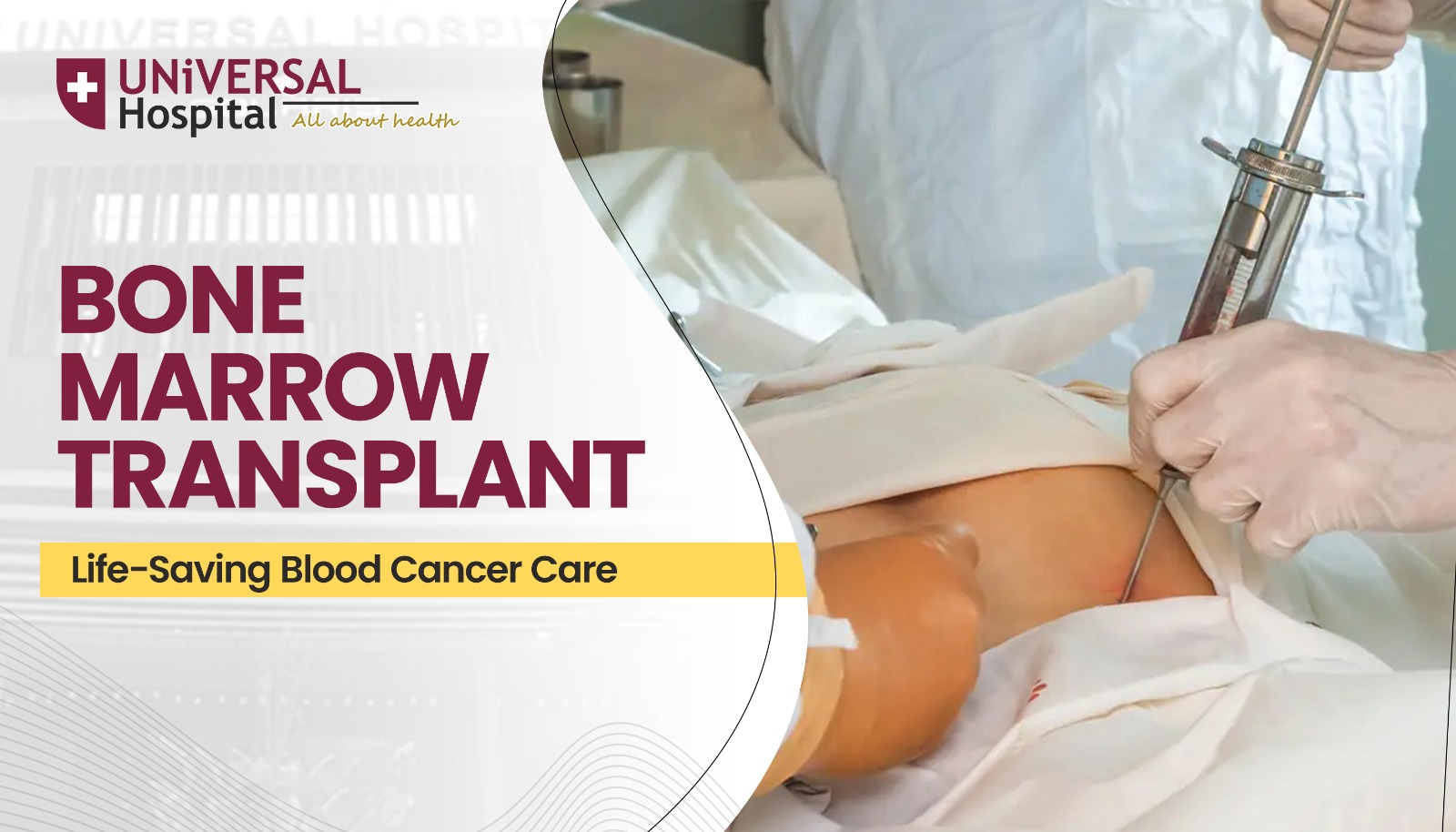
Blood cancers like leukemia, lymphoma, and multiple myeloma can be life-threatening. A bone marrow transplant—also called stem cell transplant—offers a chance for recovery by replacing damaged or diseased bone marrow with healthy stem cells.
At Universal Hospital Surat, we provide state-of-the-art CANCER CARE & ONCOLOGY services, ensuring patients receive advanced treatment and compassionate support throughout their journey.
In this comprehensive guide, we’ll cover:
- Understanding bone marrow transplant
- Causes of blood cancers needing transplant
- Common symptoms of blood cancers
- Role of diet in supporting recovery
- Exercise recommendations during treatment
- Treatment options and procedure overview
- Why Universal Hospital is the best choice for Cancer Care & Oncology
Understanding Bone Marrow Transplant
A bone marrow transplant (BMT) is a procedure to replace damaged or destroyed bone marrow with healthy stem cells. These stem cells develop into new, healthy blood cells that restore the body’s ability to fight infection, carry oxygen, and control bleeding.
Types of Bone Marrow Transplants
- Autologous Transplant
- Uses the patient’s own stem cells collected before treatment.
- Minimizes rejection risk.
- Allogeneic Transplant
- Uses stem cells from a compatible donor, usually a sibling or unrelated matched donor.
- Effective in treating cancers like leukemia and lymphoma.
- Syngeneic Transplant
- Stem cells are from an identical twin.
- Rare but highly compatible.
Each type is chosen based on the patient’s condition, age, overall health, and cancer type.
Causes of Blood Cancers Requiring Transplant
Bone marrow transplants are primarily used for treating blood cancers, but they may also be used for other bone marrow failure conditions.
Common Causes
- Leukemia – Cancer of the white blood cells, leading to abnormal growth in bone marrow.
- Lymphoma – Cancer affecting lymphocytes in the immune system.
- Multiple Myeloma – Cancer of plasma cells, disrupting normal blood cell production.
- Aplastic Anemia – Bone marrow fails to produce enough blood cells.
- Severe Immune Disorders – Rare genetic or acquired conditions affecting blood cell production.
Identifying the underlying cause is essential for effective blood cancer treatment and determining transplant eligibility.
Common Symptoms of Blood Cancers
Early detection improves outcomes. Blood cancers often cause subtle symptoms that worsen over time.
Key Symptoms
- Persistent fatigue or weakness
- Frequent infections
- Easy bruising or bleeding
- Shortness of breath
- Unexplained weight loss
- Bone or joint pain
- Swollen lymph nodes
If these symptoms appear, consult a hematologist or oncologist for timely diagnosis.
People also may want to know about Cancer Treatment: Understanding Cancer: Types, Stages & Treatments
The Role of Diet in Managing Bone Marrow Transplant Recovery
Diet plays a vital role in supporting the immune system and overall recovery during and after a bone marrow transplant.
Nutritional Guidelines
- High-protein foods – Helps repair tissues and support blood cell production. Examples: lean meat, eggs, dairy, beans.
- Fruits and vegetables – Provide essential vitamins, antioxidants, and fiber.
- Hydration – Maintain adequate fluid intake to support kidney and liver function.
- Small, frequent meals – Helps with appetite loss or nausea caused by chemotherapy or radiation.
- Low-microbial diet – Minimizes infection risk in immunocompromised patients.
Foods to Avoid
- Raw or undercooked meat and eggs
- Unpasteurized dairy products
- Raw sprouts and unwashed fruits/vegetables
- Foods high in added sugars or processed fats
A nutritionist can create a personalized plan to maximize recovery and support immune health.
Exercise for Bone Marrow Transplant Patients
Physical activity is important, but it must be adapted to your recovery stage. Exercise helps reduce fatigue, improve mood, and maintain muscle strength.
Safe Exercise Recommendations
- Light walking – Improves circulation and stamina.
- Gentle stretching – Maintains flexibility.
- Breathing exercises – Enhances lung capacity, especially after chemotherapy.
- Low-impact yoga or physiotherapy – Supports overall well-being.
Always consult your medical team before starting any exercise program, as the intensity will depend on immune function, blood counts, and overall health.
Treatment Options and Procedure Overview
A bone marrow transplant is a multi-step process requiring careful planning and monitoring.
Step 1: Pre-Transplant Evaluation
- Comprehensive physical exam
- Blood tests and imaging
- Donor matching (for allogeneic transplants)
- Psychosocial assessment
Step 2: Conditioning Therapy
Before transplant, patients may receive:
- High-dose chemotherapy – Destroys diseased bone marrow and cancer cells.
- Radiation therapy – Sometimes used to prepare the bone marrow for stem cell infusion.
Step 3: Stem Cell Infusion
- Healthy stem cells are infused intravenously, similar to a blood transfusion.
- Cells migrate to the bone marrow and begin producing new blood cells over 2–4 weeks.
Step 4: Post-Transplant Care
- Infection prevention through medications and strict hygiene
- Regular blood tests to monitor recovery
- Management of side effects such as nausea, fatigue, or graft-versus-host disease (GVHD) in allogeneic transplants
- Gradual reintegration of physical activity and diet
Recovery Timeline
- Initial immune recovery: 1–3 months
- Full immune function: 6–12 months
- Continuous monitoring to detect relapse or complications
Bone marrow transplant requires dedication, but it can be life-saving for patients with blood cancers.
Why Universal Hospital is the Best Choice for Cancer Care & Bone Marrow Transplant
Choosing the right hospital for a bone marrow transplant can make a significant difference in outcomes. Universal Hospital Surat combines cutting-edge technology, expert oncologists, and compassionate care for patients and families.
Expert Oncologists and Hematologists
- Experienced in bone marrow and stem cell transplants
- Skilled in treating leukemia, lymphoma, multiple myeloma, and other blood disorders
- Personalized care plans for each patient
Advanced Infrastructure
- Dedicated oncology and transplant units
- State-of-the-art stem cell labs and sterile isolation rooms
- Access to advanced chemotherapy, immunotherapy, and supportive care
Comprehensive Patient Support
- Nutritional guidance and diet plans for transplant recovery
- Physiotherapy and exercise programs to maintain strength
- Emotional support and counseling for patients and caregivers
- Continuous monitoring post-transplant for early detection of complications
Compassionate, Patient-Centered Approach
Universal Hospital ensures a smooth and supportive transplant experience:
-
- Clear communication about treatment steps and expectations
- Family involvement in care decisions
- Focus on quality of life alongside medical outcomes
Take the First Step Towards Life-Saving Care
A bone marrow transplant can offer a second chance for patients battling blood cancers. Early evaluation, donor matching, and careful post-transplant care are key to success.
At Universal Hospital Surat, we provide:
- Advanced stem cell therapy and bone marrow transplant services
- Expert oncologists and compassionate care
- Comprehensive support for diet, exercise, and recovery
Book a consultation today to discuss treatment options and take the first step toward a healthier, cancer-free life.
Choose Universal Hospital for trusted Cancer Care & Oncology — your partner in life-saving treatment and recovery.
📍 Universal Superspeciality Hospital beside Jash Infinity, Behind New SMC Building, Civil Cross Road, Khatodara, Surat, India, 395001
📞 +91 90810 82632
🌐 www.universalhospitalsurat.com
